Session 6 ECR presentation illustrations
Session 6 of the 4th BBNet conference was an opportunity for a selection of our early career researcher community to showcase their research. Their presentations were captured on illustration by Rebecca Osborne of Rebecca Osborne Studios Ltd.
Click on the images to view them; right click and select “save as” to save them.
Influence of bioeconomy policies in valorisation of beet and cane bagasse
Maureen Okibe, University of Surrey
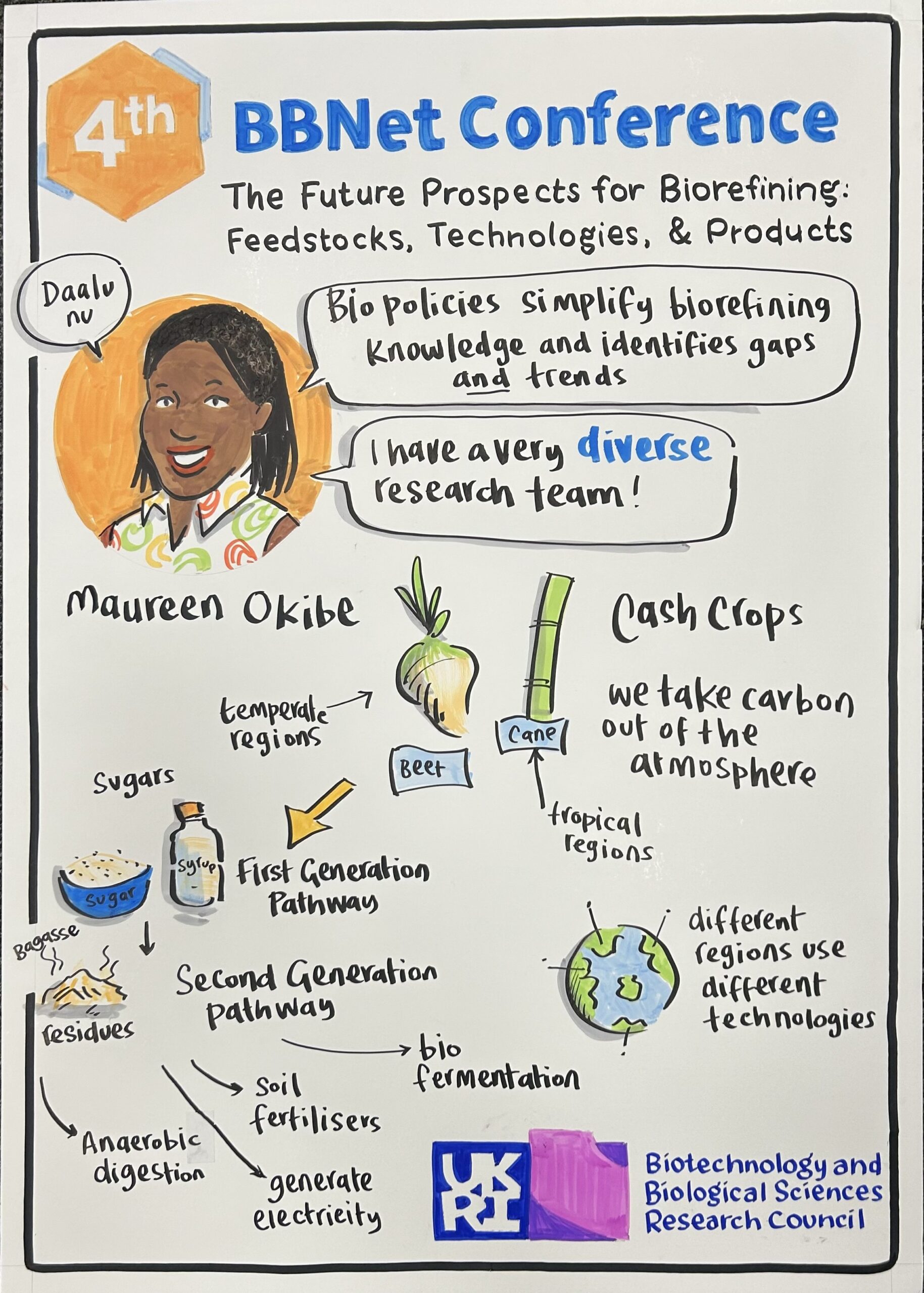
Sugar crops (sugarcane and sugar beet) are renewable, carbon-depleting plants. Cane and beet are predominantly cultivated in over 100 countries from parts of Europe, Russia, Africa, Central and South America, USA, Caribbean, Asia, and Australia. Sugar mills around the globe are struggling financially following fluctuating sugar prices leading to significant decline in profitability margins. Bioeconomy initiatives create opportunities for revenue diversification, reusing byproducts from sugar processing mills, i.e., sugarcane bagasse (SCB) and sugar beet bagasse (SBB) for fuels, platform chemicals and power. SCB/SBB residues are fibrous, agro-industrial lignocellulosic biomass derived during sugar/ ethanol production. SCB/SBB are generally burnt inefficiently in traditional boilers for cogeneration of heat and power. In some cases, these bagasse byproducts are dumped on landfill sites and arable farming lands without reaping the benefits of lignocellulosic biomass reuse. The aim of this work is to investigate the influence of bioeconomy policies on improved valorisation of SBB and SCB. This study surveys literature on SCB/SBB, classifying outcomes, researching national and regional bioeconomy policies of bagasse producing nations and evaluating the impact of policy interventions on lignocellulose reuse. In regions where bioeconomy policies are robust, i.e., Europe and EU innovative uses of bagasse byproducts are dense. In parts of Sub-Saharan Africa, i.e., West Africa and South Asia, i.e., Pakistan, where bioeconomic policies are deficient, optimal valorisation of these residues are minimal. Future work may identify macro-economic and environmental factors driving poor SCB reuse.
Engineering division of labour in Yarrowia lipolytica for polysaccharide degradation
Eliza Atkinson, Imperial College London
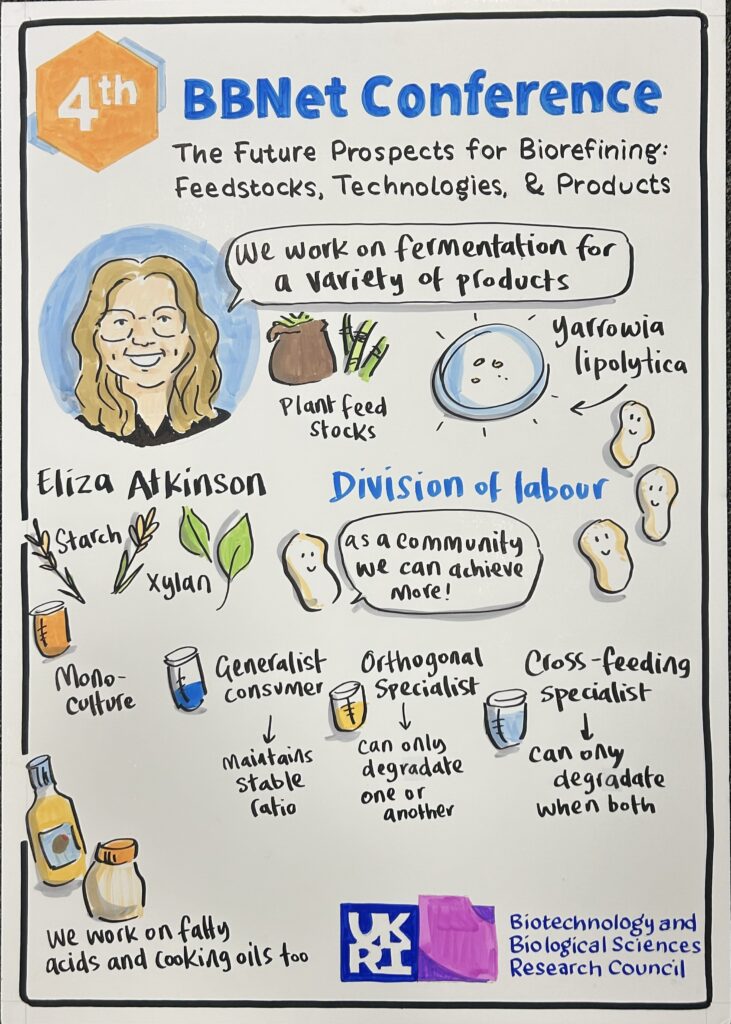
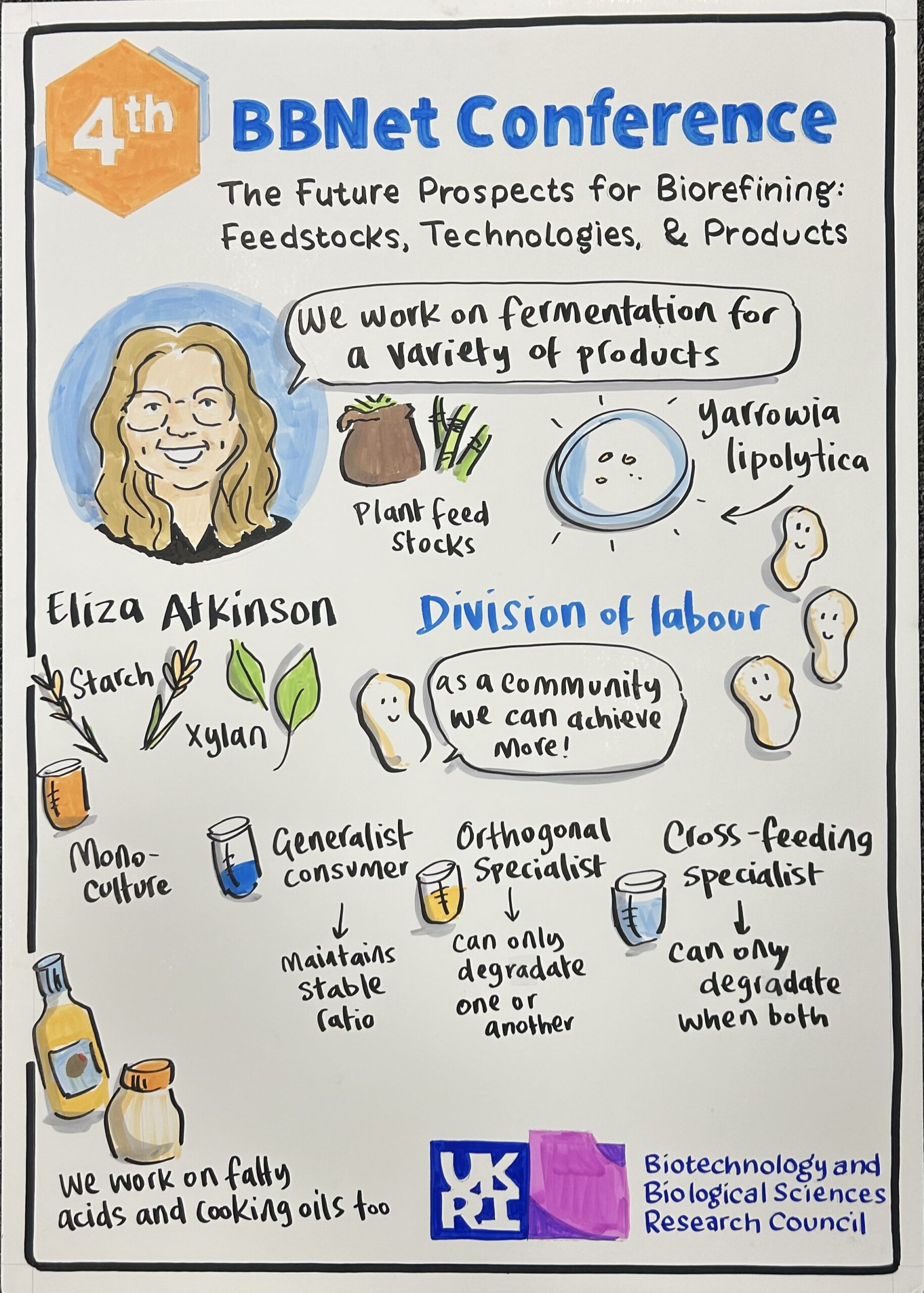
Agricultural and food wastes are a promising renewable, low-cost feedstock for bioproduction of valueadded compounds. Creating a consolidated bioprocess using these complex substrates in a single microorganism is limited by metabolic burden; the overexpression of heterologous genes redirects endogenous resources from essential processes, thus reducing the growth and productivity of the cell. Microbial consortia, employing division of labour (DOL) between cells, can mitigate this burden and achieve waste utilisation beyond that attainable in monocultures. In this project we investigate the use of DOL in consortia for the degradation of plant-derived polysaccharides by Yarrowia lipolytica, a promising host for a range of biotechnological applications.
Biomanufacturing chemicals using maritime waste feedstocks: Assessing the carbon footprint of pilot scale processes
Joe Penhaul Smith, Sustainable Extricko
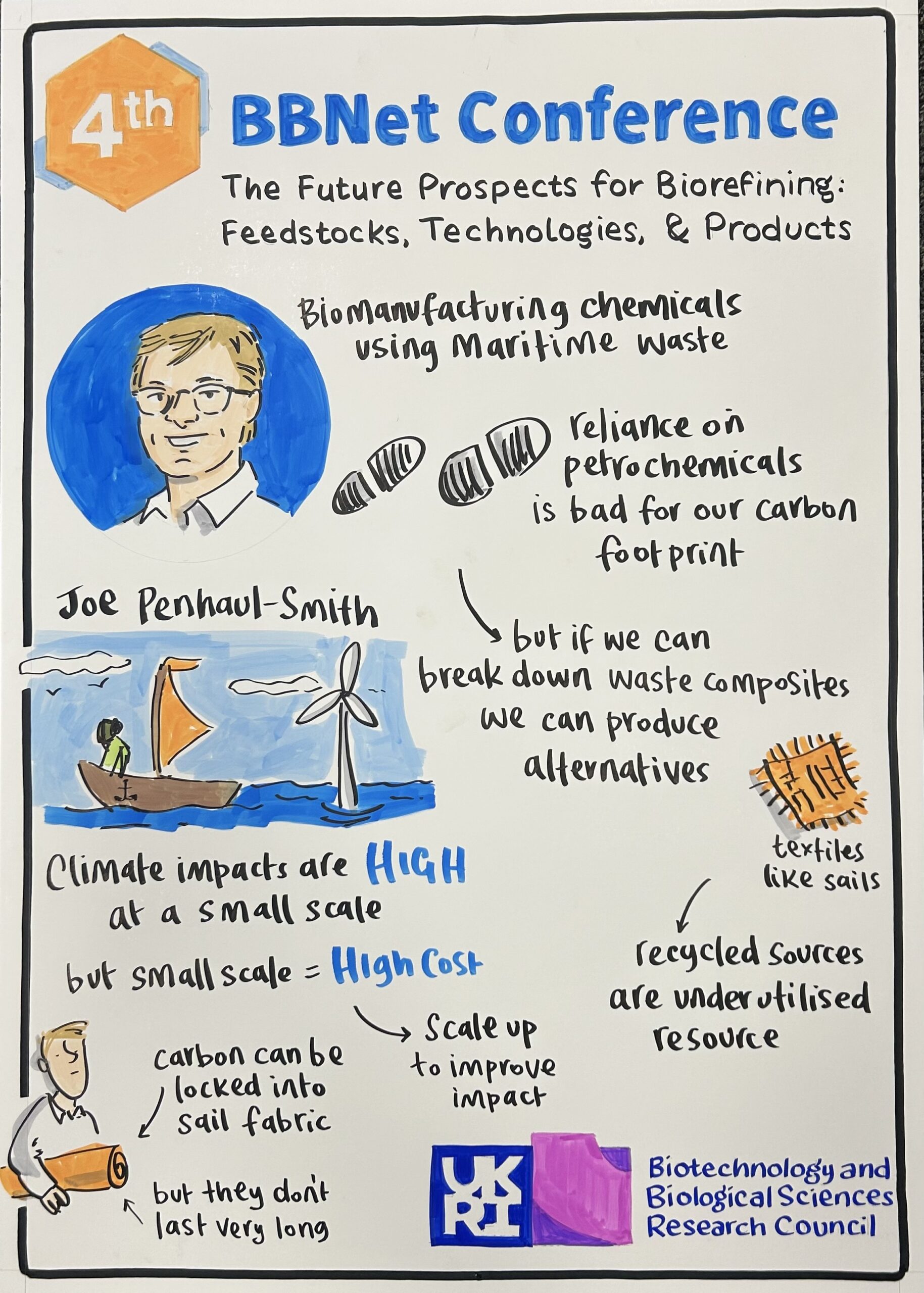
In the maritime industry, synthetic textiles such as Dacron and composites such as glass reinforced polymers, have replaced the use of cotton, wood or steel across a range of vessel sizes since the 1960s. However, reliance upon these synthetic polymer textiles and composites has a range of challenges, in particular: waste. Waste during the manufacturing process and at the end of the product’s life currently has limited, if any, solution at end of life apart from landfill or incineration. The breakdown of these wastes has been linked to the production of microplastics, microfibres and leaching of heavy metals into the surrounding environment (Lekshmi et al. 2023; Hopkinson et al. 2021; Ciocan et al. 2024; Geraghty et al. 2025). As a result, recycling solutions which can reduce the flow of these textiles and composites to landfill are critical. Current recycling solutions such as mechanical, chemical or pyrolytic are limited in their application, as these textiles and composites are chemically complex and often coated with additional products to render them more resistant to UV or salt damage. As a result, Sustainable Extricko and the Sadler lab in the University of Edinburgh have combined a novel recycling solution for these textiles and composites (pressolysis), with a metabolic upcycling solution, to valorise the recovered chemical monomers. To understand the potential of such solutions to address this waste stream, the carbon footprint of this process was quantified and contextualised to address this kiloton waste stream in the UK.
Chitin-degrading enzymes: Potential tools for wide biotechnological applications
Mohammad Dadashipo, Teesside University
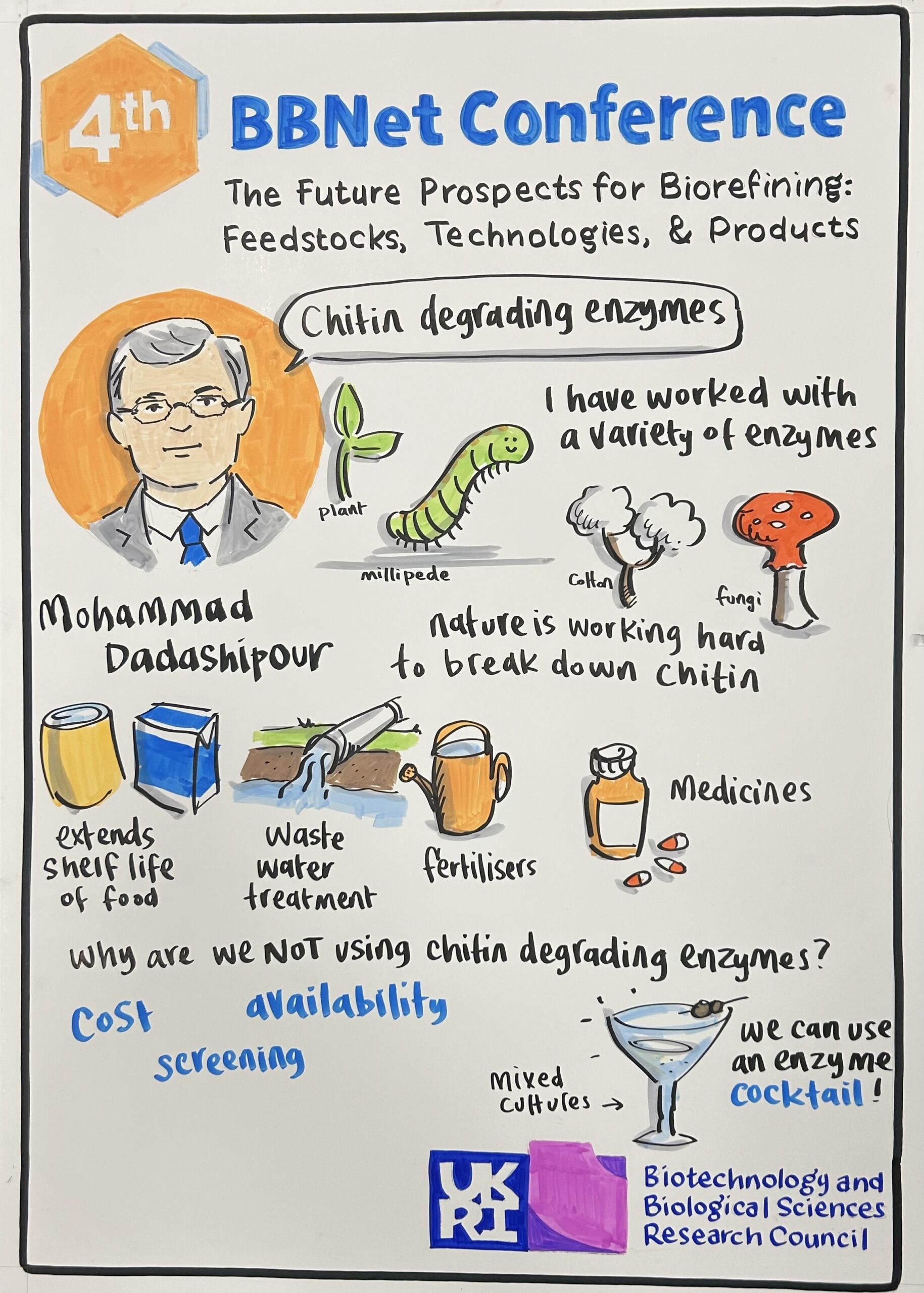
Chitin, a linear polymer of β-1,4-linked N-acetylglucosamine (GlcNAc) residues, is the second most abundant polysaccharide in nature following cellulose. This biopolymer is a fundamental structural component in diverse organisms, including the exoskeletons of insects and crustaceans, the cell walls of fungi, and certain internal structures of invertebrates. Unlike petrochemical-based polymers (e.g., PET), natural carbohydrate polymers, e.g., cellulose and chitin, have been efficiently degraded in nature, which is in line with the lack of any report on a major accumulation of them on the planet. Enzymes capable of breaking down chitin are gaining increasing recognition for their diverse applications across various industrial and scientific fields, such as biotechnology, agriculture, medicine, and environmental management. The abundance and inherent resilience of chitin underscore the importance of chitindegrading enzymes for natural nutrient recycling and industrial processes aiming to valorise chitinous waste streams. The escalating interest in these enzymes reflects a growing awareness of their potential to address significant global challenges in areas such as sustainable agriculture, effective waste management, and advancements in human health. This short presentation comprises an introduction on chitin-degrading enzymes, including chitinases, their existing and potential applications and hurdles in their wide usage, along with some screening results from terrestrial and seawater sources in northern England.
Characterisation of novel biocatalysts with unique properties towards sustainable biocatalysis
Henry Madubuike, University of Salford
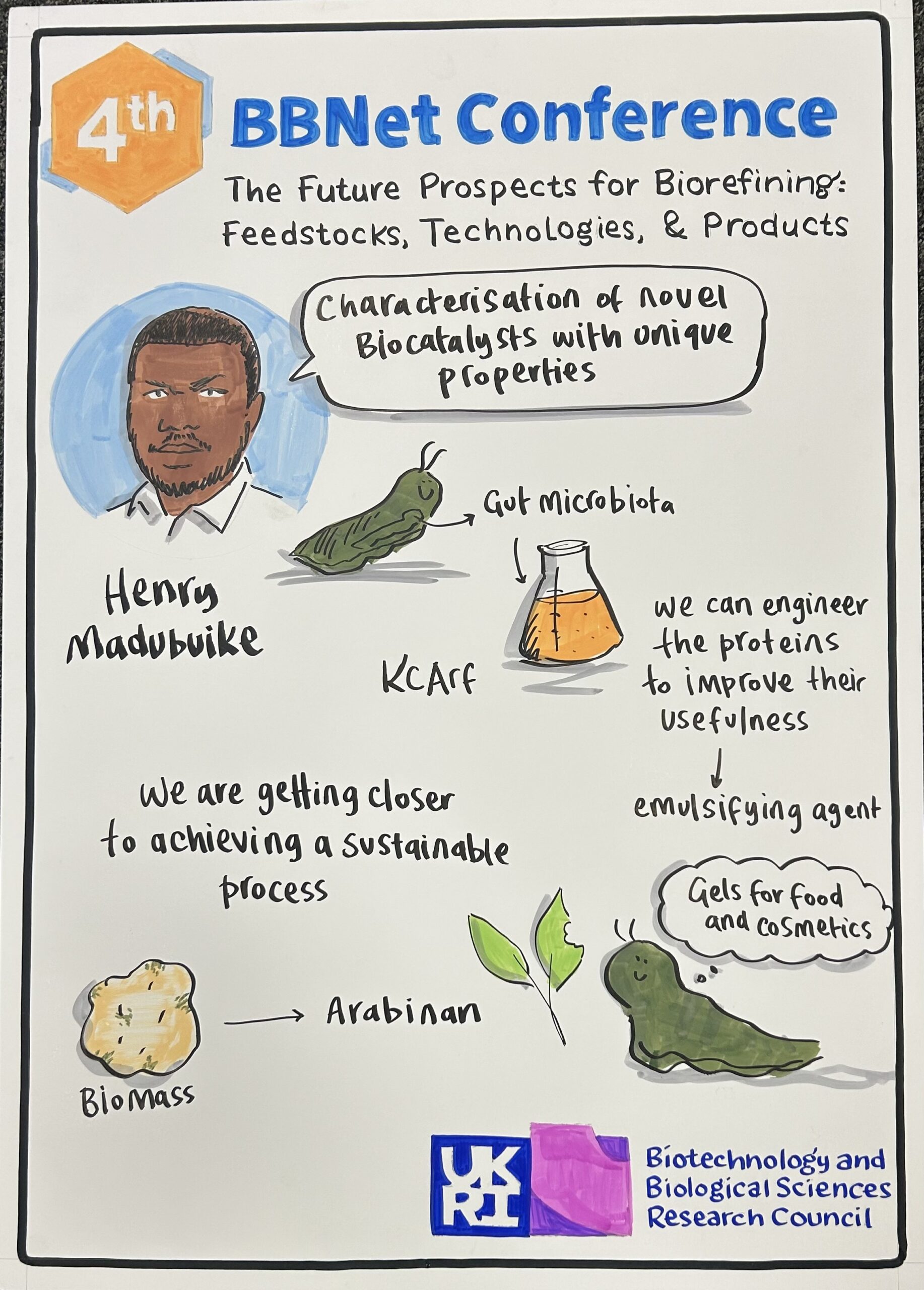
The sustainable valorisation of biomass into fuels and high-value chemicals requires the action of specialised enzymes with unique properties. Accessory enzymes such as arabinofuranosidases relax the intricate polymer structure of lignocellulosic biomass, thereby improving the efficiency of backboneacting enzymes, and the release of substrates for the synthesis of platform chemicals. In this study, we report the characterisation of a novel arabinofuranosidase (KcArf) mined from the gut microbiota of the common black slug. The DNA sequence of KcArf was cloned in pET(21)b+, and expressed recombinantly in Escherichia coli BL21 (DE3). The query sequence showed 100% sequence identity to an uncharacterized protein described as family 43 glyco-sylhydrolase from Kluyvera cryocrescens hence the protein is designated KcArf. Homology mod-elling and multiple sequence alignment showed the presence of catalytic residues reported in the activity of arabinofuranosidase family. KcArf was active on 4-nitrophenyl-α-L-arabinofuranoside (specific activity- 0.185 U/mg) and showed optimal temperature of 30°C, optimal pH of 7, and Km value of 0.84 µmol. KcArf showed measurable activity when tested on xylosidase and rhamno-sidase substrates suggesting multifunctionality. KcArf was active on linear 1,5 α-L-arabinan, and debranched arabinan but no activity was detected when tested on arabinoxylan confirming KcArf as an exo-1,5-α-L-arabinofuranosidase. The characterization of KcArf presents interesting prop-erties suitable for developing a sustainable route to biomass valorisation which supports the prospect of producing molecules with reduced environmental and energy impact.
Developing frameworks that deliver whole-system sustainability benefits for the bioeconomy
Daniel Taylor, Aston University
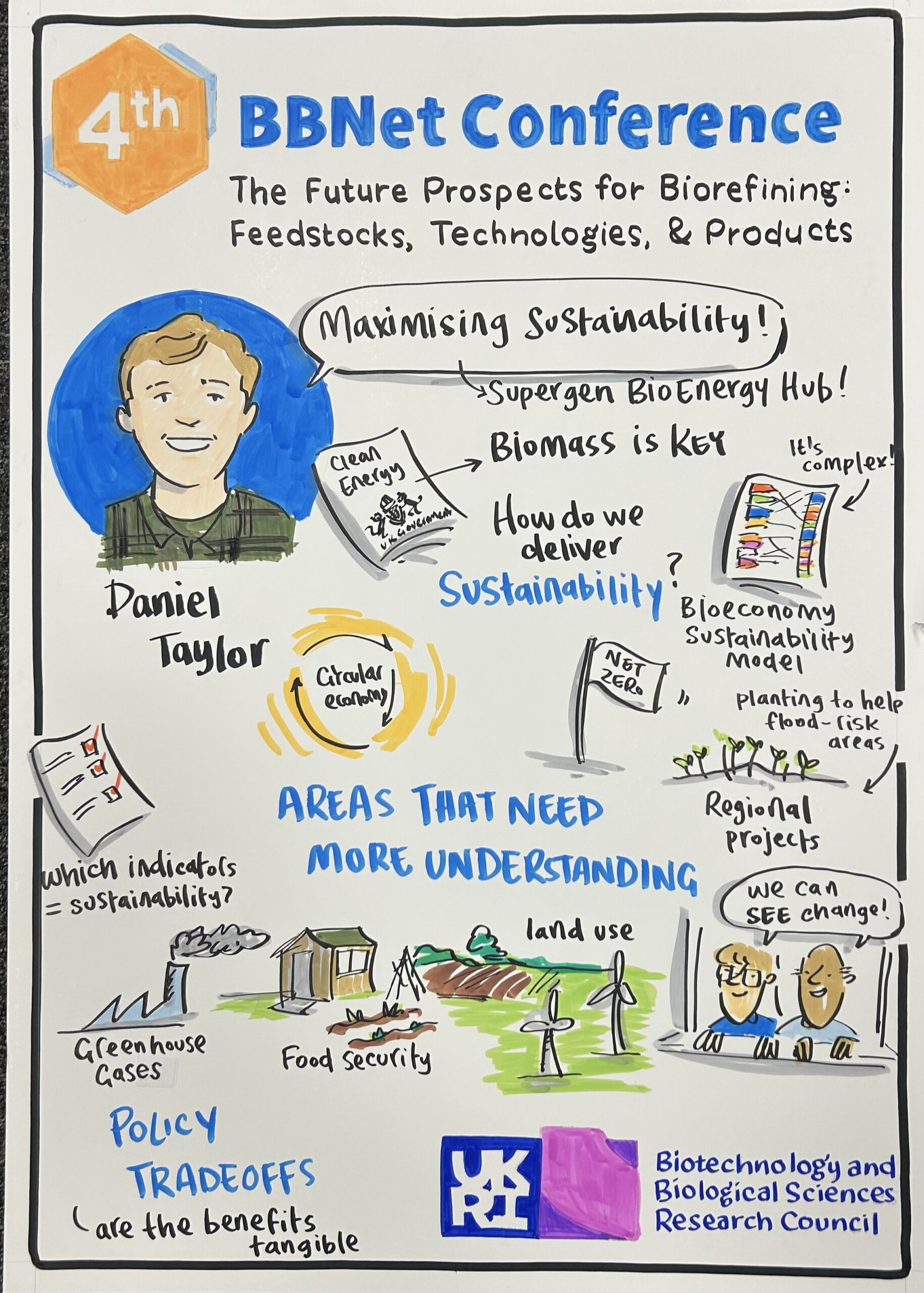
The development of net zero has focused minds on carbon balances, and the potential for biomass use to generate negative emissions, but optimising systems to maximise carbon removals risks unsustainable biomass use. In contrast, developing a sustainable bioeconomy that delivers benefits across the valuechain will present challenges and trade-offs to policy practitioners who are seeking to achieve a singular net zero target. Sustainability assessment tools, such as the Supergen Bioeconomy Sustainability Indicator Model (BSIM), demonstrate and quantify the opportunities and risks associated with biomass use to support decision-making. But going beyond sustainability assessment, this research seeks to understand what the enabling environment for policy needs to deliver whole system sustainability that goes further than a singular goal. It will also address how the interfaces between individual indicators of bioeconomy sustainability determine the overall system sustainability. The aim is to support policy design and decision making in navigating the complex and tricky trade-offs associated with biomass use, which links our environment, economy, and society. This presentation will briefly contextualise interdisciplinary work on the bioeconomy, sustainability, net zero and policy completed to date, as well as outlining our plans to develop new frameworks that support the delivery of sustainability benefits across the whole bioeconomy system.